Robotic Surgery
Robotic surgery is an advanced surgical approach that allows surgeons to perform complex procedures with exceptional precision, control, and visual clarity. It is used in selected head and neck procedures where accuracy is critical.
What is robotic surgery?
Understanding robotic-assisted surgery
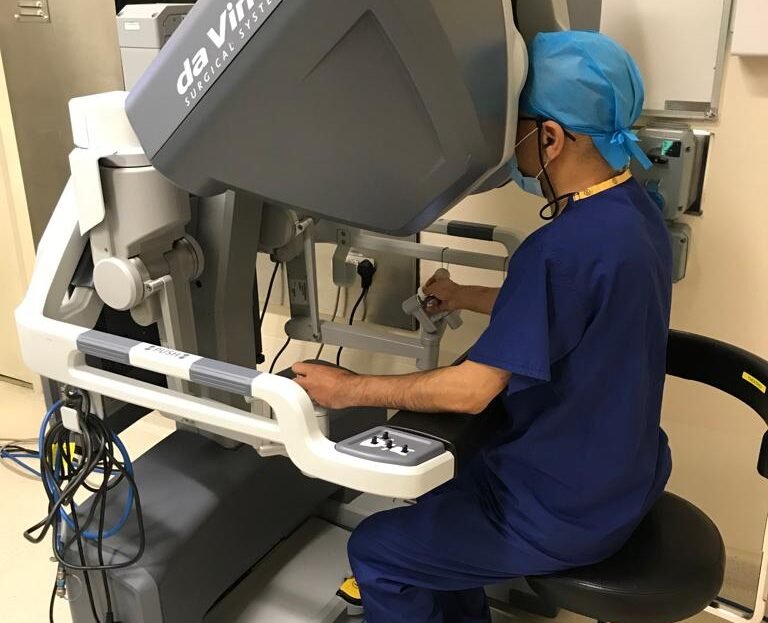
Robotic surgery is a surgeon-controlled technique that uses robotic instruments and a high-definition 3D camera to assist during surgery.
The robot does not operate independently. Every movement is performed by a trained surgeon, with the robotic system translating their hand movements into extremely precise actions.
Key features:
Enhanced precision and stability
Improved visualisation of hard-to-reach areas
Greater control during delicate procedures

When is robotic surgery used?
Robotic surgery may be considered when:
The surgical area is difficult to access using traditional techniques
Precision is especially important
A minimally invasive approach is preferable
It is commonly used in selected head and neck procedures, particularly where access through the mouth can reduce the need for external incisions.
Robotic surgery is not suitable for everyone, and in some cases traditional surgery or non-surgical treatment may be more appropriate.
Benefits of robotic surgery
Compared to conventional surgery, robotic techniques offer:
Greater surgical precision
Improved visual detail for the surgeon
Reduced disruption to surrounding tissue
Shorter hospital stays in suitable cases
Faster recovery for some patients

Is robotic surgery safe?
Robotic surgery:
Uses established, evidence-based techniques
Is performed by specially trained surgeons
Is carefully selected on a case-by-case basis
As with all surgery, there are risks. These will be explained clearly during your consultation so you can make an informed decision.
What happens during robotic surgery?
While each procedure differs, robotic surgery typically involves:
Careful pre-operative planning
Minimally invasive access to the surgical area
Surgeon-controlled robotic instruments
High-definition 3D visual guidance throughout
Your surgeon remains in full control at every stage.

What to expect after surgery
Recovery depends on the type of procedure performed, but many patients experience:
Reduced post-operative discomfort
Shorter recovery times compared to open surgery
Earlier return to normal activities in suitable cases
Your recovery plan will be tailored to your procedure and discussed in advance.

What happens in a consultation?
Personal assessment is essential
Your consultation will include:
Review of symptoms and medical history
Examination and imaging if required
Discussion of suitable treatment options
Honest advice on whether robotic surgery is appropriate
No treatment is recommended unless it is in your best clinical interest.
Take the next step
If you would like to understand whether robotic surgery is suitable for your condition, a specialist consultation is the safest place to start.