Snoring Surgery
Snoring surgery can be an effective solution when lifestyle changes or devices haven’t worked. The right treatment depends on why you snore — and that’s why a personal assessment is essential.

Is snoring surgery right for me?
Snoring surgery may be suitable if:
You snore frequently or loudly
Snoring affects your sleep quality or relationships
Non-surgical options (mouthguards, sprays, position changes) haven’t helped
A structural cause has been identified (e.g. soft palate, nasal obstruction)
Snoring surgery may not be suitable if:
Snoring is caused mainly by temporary factors (e.g. a cold/URTI)
Significant sleep apnoea is present (this requires specialist assessment)
Lifestyle changes alone are likely to help
A consultation allows us to recommend the safest and most effective option for you.
Why do people snore?
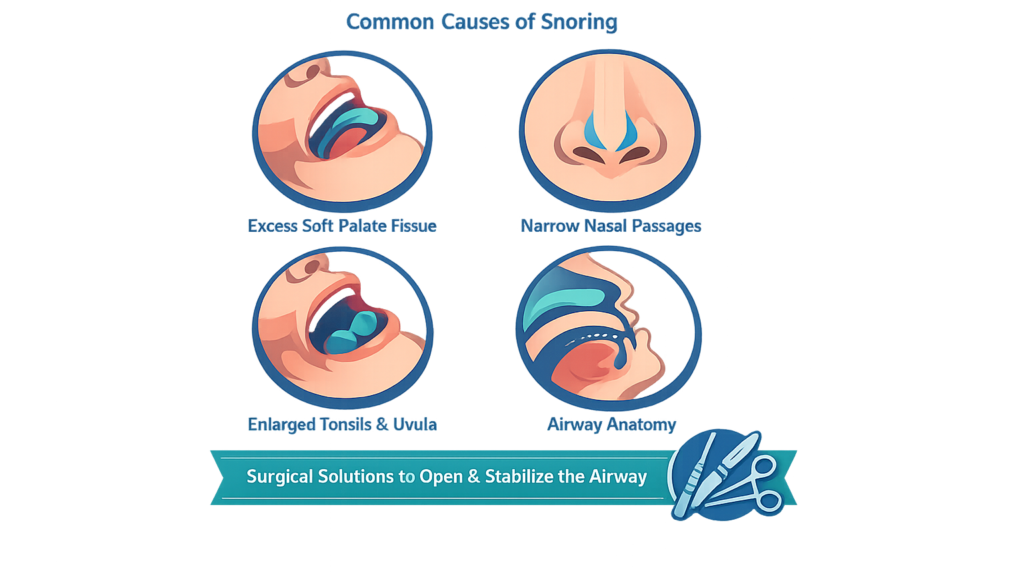
Snoring happens when airflow is partially blocked during sleep. Common causes include:
Excess or relaxed tissue in the soft palate
Narrow nasal passages
Enlarged tonsils or uvula
Structural anatomy of the airway
Surgical treatment focuses on widening or stabilising the airway to reduce vibration and noise.

Types of snoring surgery
Depending on your anatomy, treatment may include:
Sleep nasal endoscopy
Minimally invasive soft palate procedures
Nasal airway correction
Radiofrequency or laser-assisted techniques
Transoral robotic surgery – tongue based reduction
Your specialist will recommend the most appropriate approach after examination.

Is snoring surgery safe?
Modern snoring surgery is:
Performed using established medical techniques
Typically minimally invasive
Associated with short recovery times in most cases
Recovery varies by procedure, but many patients return to normal activities within days.

What happens next?
Your snoring assessment includes:
Discussion of symptoms and sleep history
Examination of the nose, throat and airway
Explanation of suitable treatment options
Honest advice on expected outcomes
No treatment is recommended unless it is appropriate for you.
Take the next step
If snoring is affecting your sleep or quality of life, a personal assessment is the safest way to understand your options.